Tuesday, September 1, 2026
From click to kit: how automation is transforming sports customization
2026Promotional gifts & garmentsPersonalisation

The sports industry is turning personalization into a highly complex production process. To make it profitable, the industry is automating everything that happens between the customer's click and the finished product.
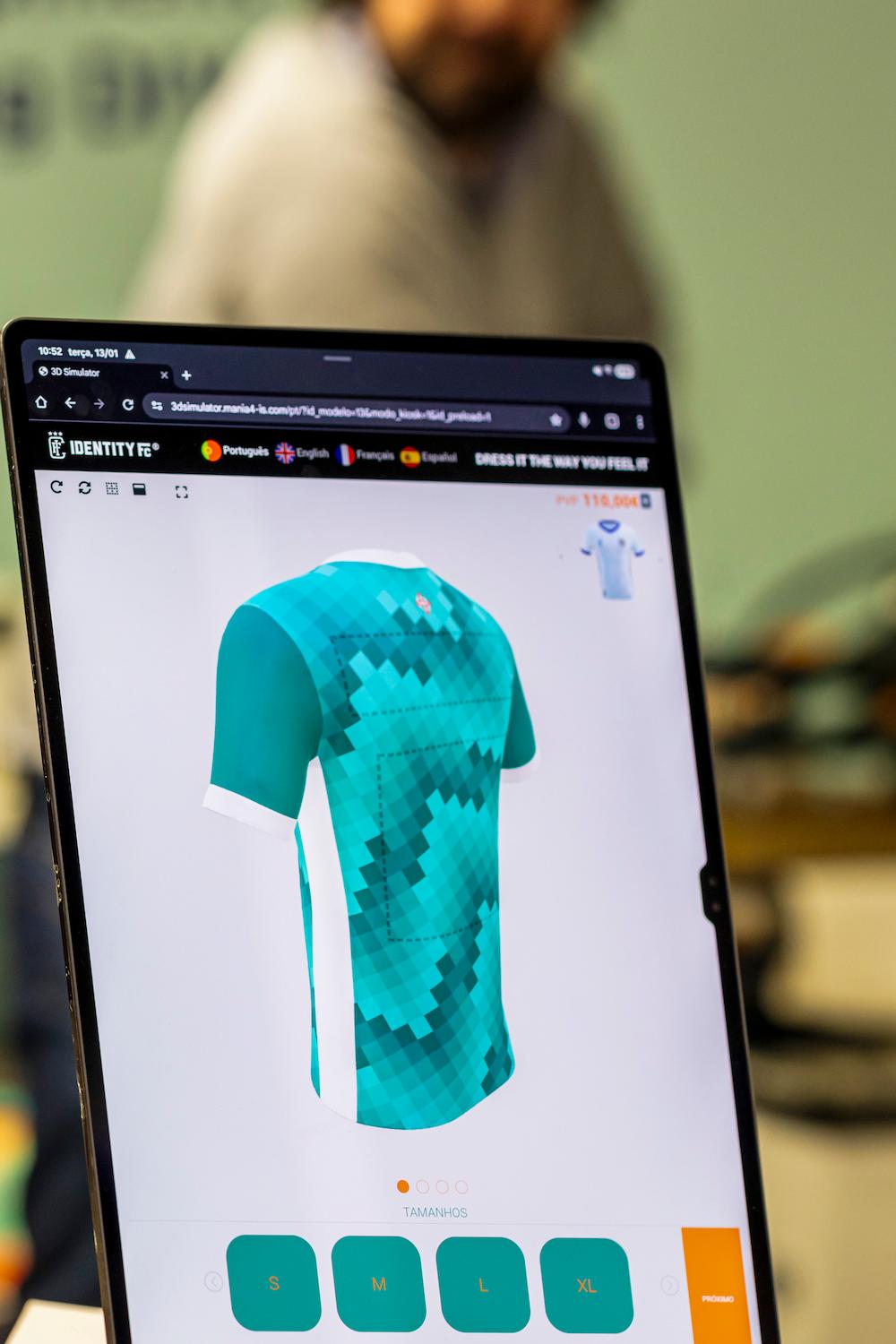
A jersey with a name and number seems, at first glance, a simple task. But behind a personalized sports kit, dozens or even hundreds of combinations can coexist: names, numbers, sizes, crests, colors, sponsors, models, and the positions of each element. During the next edition of C!Print Madrid, from January 12 to 14, 2027, You can watch it live through their Play! Innovation Academy's new space, showcasing the incredible capabilities of technology and applications fully dedicated to personalization.
As the volume increases, the difficulty is no longer just in printing. It's in manage variety without letting variety destroy productivityThat's where sports customization is becoming one of the best laboratories for digital printing, sublimation, variable data, and workflow automation.
From producing more to producing different
For years, the industrial model relied on a simple idea: the larger the production run, the more efficient it was. Digital personalization is changing that equation. Today, an order can consist of hundreds of units, and each one can be different. A football team might need a kit for each player; a padel tournament might require personalized garments for each participant; a race might generate hundreds of products with different names, bibs, and categories.
Digital printing makes it possible to produce those small differences without needing to prepare a new printing plate for each design. But when the variables multiply, a new challenge arises: How can we manage all that information without turning production into an endless succession of manual tasks? The answer increasingly lies in connecting the order with production.
SUCCESS STORY 1:
The Tour of Spain: customization for an event that cannot be stopped
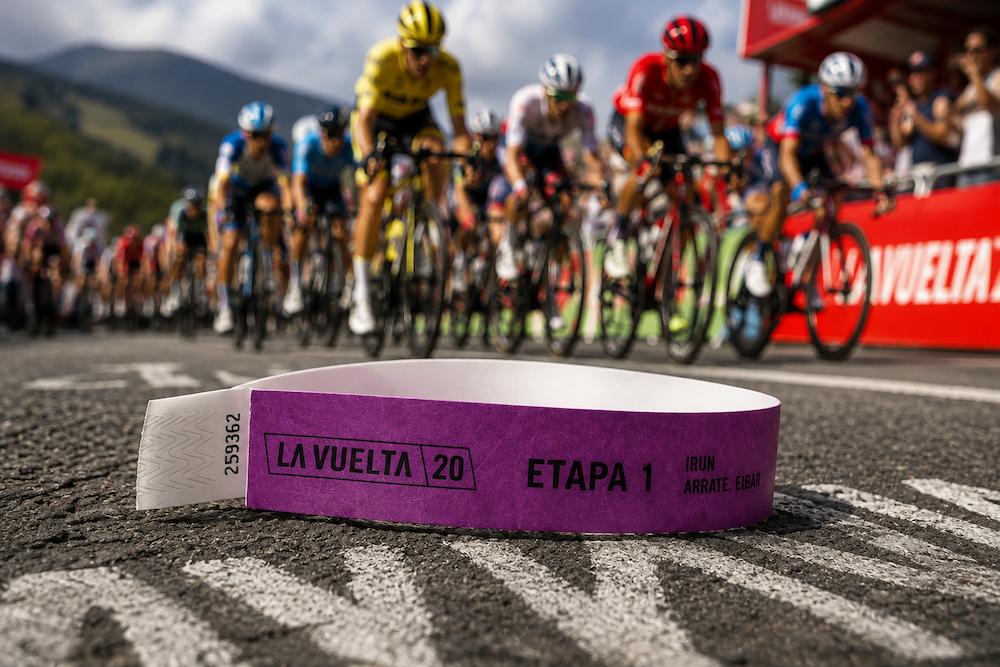
When sport stirs passions, every detail counts. For SRFLYER, exhibitor at C!Print Madrid collaborate with The Tour of Spain It means much more than producing customized items: it means being part of one of the country's great sporting stages and contributing to building a brand experience that thousands of people can touch, share and remember.
The project brings together different customization solutions tailored to the needs of a large event. Among them, high-definition custom Tyvek® wristbands, printed with Epson technology and calender capable of incorporating colors, logos, numbers, QR codes and variable data, with a secure adhesive closure; sublimated fabric wristbands, with full-color designs integrated into the fabric fibers and designed for complex graphics and comprehensive customization; cotton bagscustomized through digital printing or screen printing; and Large format digital printed roll-up bannersdesigned to generate visual impact and facilitate communication in different spaces of the event.
Production is also carried out in a staggered, adapting to the needs of the event and the orders that are generatedThis type of collaboration reflects how personalization applied to sports requires much more than simply printing a logo. It involves combining quality, flexibility, variety of support and responsiveness to match the rhythm of a large-scale event.
In a major sporting event, every detail communicates and every detail builds a brand. SRFLYERWorking with events like La Vuelta a España means pushing boundaries and demonstrating the limits of personalization. As SRFLYER states:
We do not print to be present. We customize to be part of the experience.
SUCCESS STORY 2:
Jim Sports: When Customization Comes to the Factory
A good example of this evolution can be found in the Spanish group Jim Sports and his company and PMG Promogift exhibitor, Eme InversiaThe company already had experience in design, screen printing, stamping, and customization of sporting goods. But sublimation presented a different opportunity: it allowed them to take the complete customization of garments to a new level. The alternative was clear: continue outsourcing production or invest in their own capacity.
The company opted for the second option.
With the support of DigipressThe company incorporated a sublimation system Epson SureColor and trained his team in about a month. This decision allowed him to create his own production line focused on customizing sportswear. The technological choice also had a specific reason: the ability to work with fluorescent inks, expand the color range, and reproduce complex designs on sportswear. According to the case published by Digipress, Eme Inversia reached the limit of its production capacity as demand grew. Jim Sports thus opted for something more important than just a new machine: directly control a critical part of your production chainThe case also shows the extent to which...Flexibility can become a strategic advantageWhen digital production is flexible, the same infrastructure can respond to the needs of different markets.
The next challenge: automating what happens before printing
But having in-house production capacity doesn't solve the customization problem on its own. Now imagine an order for 200 kits. Each player has a name, a number, and a size. The crest must be in a specific position. Sponsors may vary. The design must be adapted to each size. The files must be reviewed. The elements must be properly prepared for production, and finally, the pieces must be arranged as efficiently as possible on the material.
If each of those operations is performed manually, the digital printer ceases to be the bottleneck. The bottleneck then becomes the workflow. Here we see one of the less visible transformations of personalization: the automation of pre-press.
Digipress, for example, has developed OneflowPDF Specifically designed to automate processes that traditionally require human intervention: file reception, preflight, validation, preparation, and integration with production systems. The company states that its goal is to connect orders with production and reduce errors and processing times. Its specific application to sportswear illustrates where this model can evolve: Automatic generation of garments by size, management of names and numbers, file verification, customer approval, and optimization of nesting to make better use of the material.
The machine remains essential. But it is becoming increasingly clear that Productivity does not depend solely on printing speedIt depends on everything that happens around her.
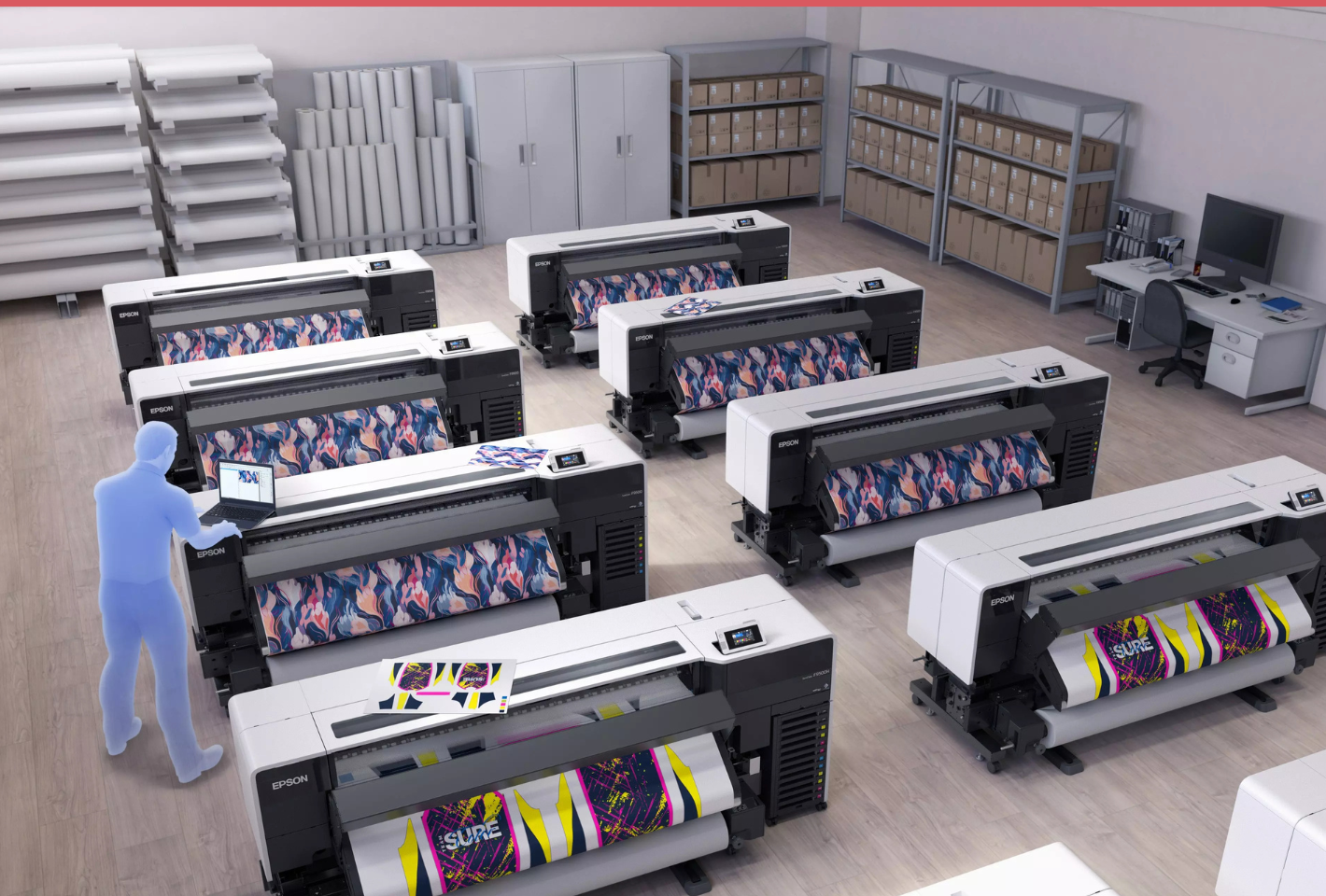 Epson SC-F9500 printer fleet
Sport as a laboratory for personalization
That's why sports are so interesting for the printing industry. It's a market where large volumes and enormous diversity coexist. There are clubs, federations, competitions, events, brands, shops, fans, and individual consumers. And they all might want something different.
Furthermore, personalization has an emotional value that goes far beyond the product itself. A t-shirt with a name on it is not simply a garment. Digital printing allows for that difference to be created. Automation makes it possible.
And the next step will be even more connected
The trend points toward a model where the consumer, software, and production are increasingly integrated. E-commerce generates the order; data describes what needs to be produced; software prepares the work; automation verifies that everything is correct; printing manufactures each piece; and finishing transforms digital data into a physical product.
In this scenario, the question is no longer just what a machine can print.
The question is: How many different products can we profitably manufacture within the same flow? That is probably one of the biggest challenges (and opportunities) that personalization will face in the coming years.
Sport, personalization and automation: three sides of the same transformation
These success stories demonstrate how incorporating technology can transform a production need into a new strategic capability. And automation and variable data solutions represent the next step: connecting that production capacity with the order and the information that generates it. At C!Print Madrid 2027, many of these technologies and applications will be represented by companies such as Epson, Roland DG, Grupo FB - Brother, Melco, Sr Flyer, Ezedichi, Dataline, Tu Dirás, Happy Japan or Photo Center 3D Among other exhibitors specializing in printing, personalization, textiles, and software. Don't miss the opportunity to find the best technological personalization solutions for any challenge at C!Print Madrid.
Registration for accreditation to attend the edition from January 12 to 14, 2027 will open in early October.
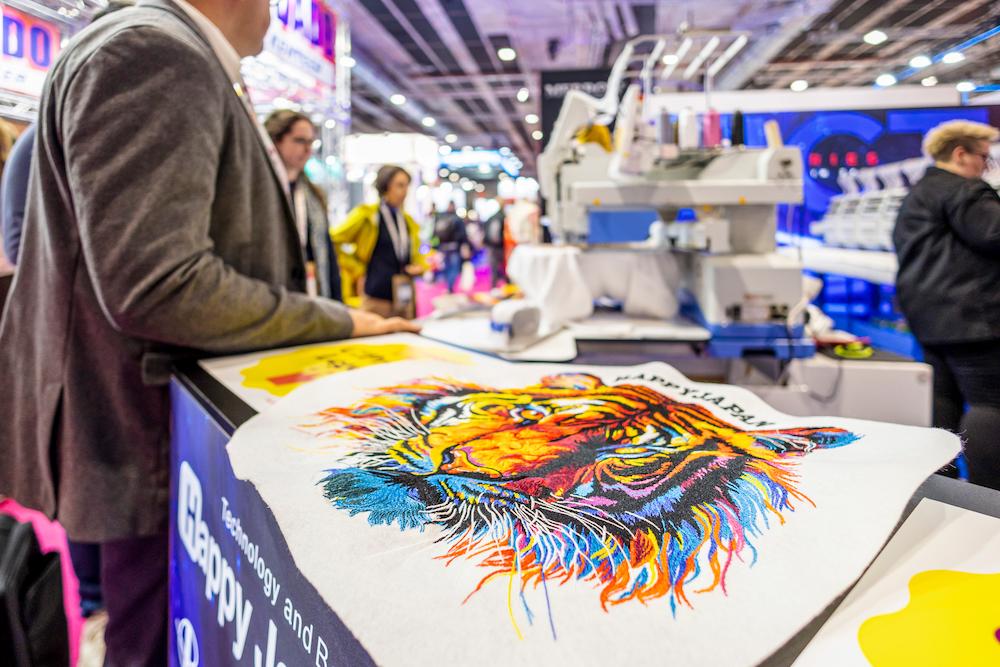 Happy Japan Stand Detail at C!Print Madrid