Thursday, September 17, 2026
From PPWR to competitive advantage: a new opportunity for businesses
20262027Associations and MediaVisual CommunicationCutting and finishingDigital printingInnovationMaterials and suppliesPromotional gifts & garmentsPersonalisationRetail and POSSignage & digital displaysOnline printing servicesSoftware - ERPs
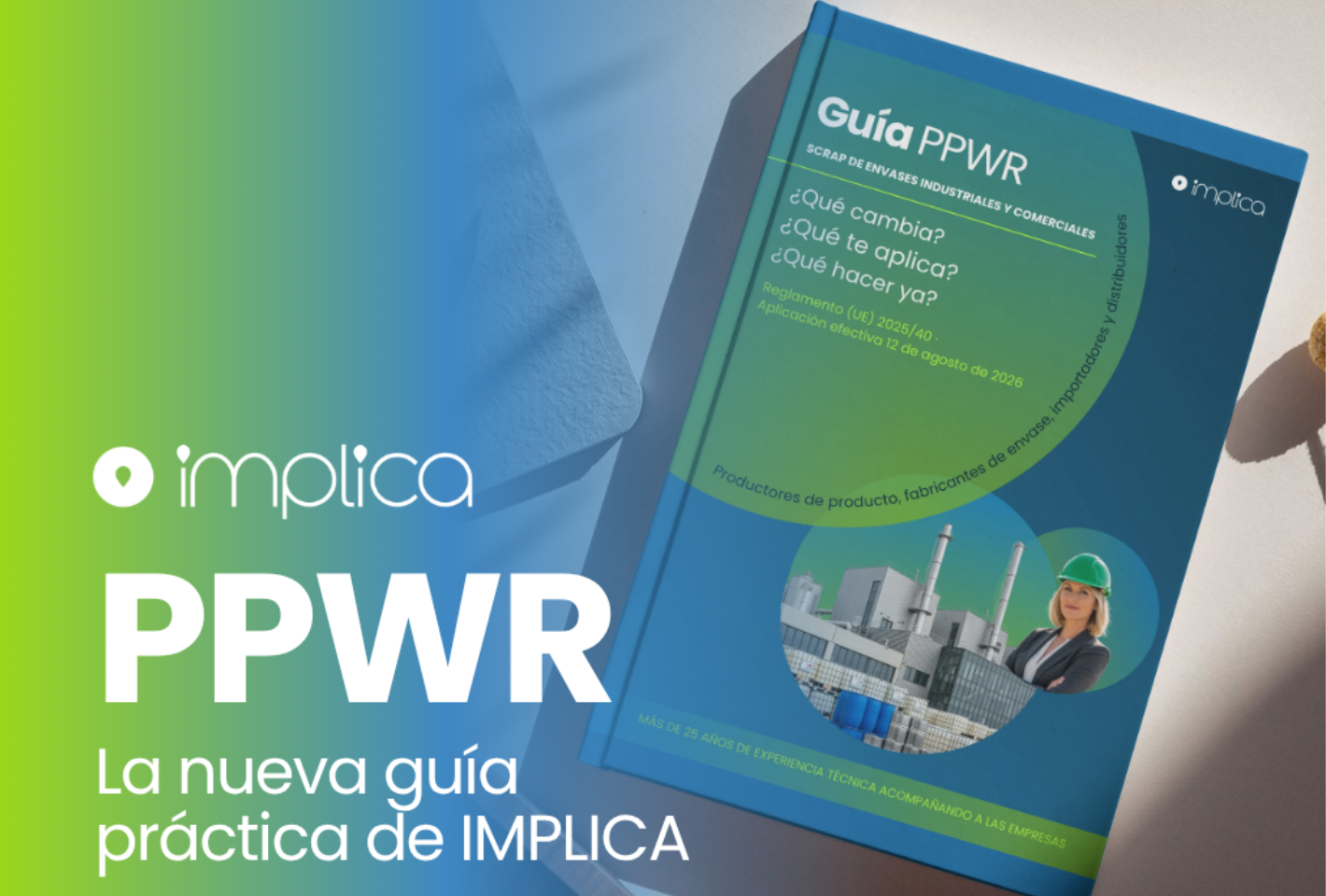
Anticipating change will be key to transforming regulatory compliance into innovation, differentiation, and added value for customers.
The European Packaging and Packaging Waste Regulation, known as PPWR, is now a reality. Since August 12, 2026, its general application has opened a new chapter for all companies that design, manufacture, market, or use packaging in Europe. This also applies to sectors that, until now, may not have considered packaging regulation a strategic factor in their operations.
This is the case for many companies involved in printing, visual communication, and personalization. Therefore, the C!Print Madrid trade show is precisely one of the best venues to discuss this shift. A sector where creativity, technology, materials, design, and production converge now faces a challenge that goes far beyond choosing a machine, ink, or substrate: how to integrate circularity into the product and turn it into a business advantage.
The PPWR is not just another modification to the regulatory framework. It's a paradigm shift. Regulation (EU) 2025/40 establishes requirements for the entire life cycle of packaging: from design and manufacture to placing it on the market, reuse, collection, and recycling. Its objective is to reduce waste, improve recyclability, and move towards a circular economy with harmonized criteria across the European Union.
This means that companies can no longer simply manage their waste correctly. It's time to ask themselves what materials they use, how they design their products, what information they can provide, what packaging they put on the market, and what responsibilities they assume for it.
Compliance is no longer enough
In Spain, the PPWR (Plain Packaging Waste Reduction) is in addition to the obligations arising from Royal Decree 1055/2022 and Extended Producer Responsibility (EPR). For many companies, especially those that until recently did not have direct responsibility for the packaging they generated, this change represents a significant adaptation effort.
But compliance shouldn't be seen merely as an administrative obligation. The new European landscape presents an opportunity to review processes, optimize materials, anticipate changes, improve traceability, and develop higher-value propositions for customers.
The PPWR requires a holistic analysis of packaging. Recyclability, minimization, reuse, recycled content, information, and traceability are becoming increasingly important. Furthermore, the Declaration of Conformity is becoming essential to demonstrate that packaging meets applicable requirements. This declaration should not be seen as an isolated step, but rather as part of an evaluation process that will evolve as new requirements come into effect.
The consequence is clear: regulations are beginning to influence decision-making processes in design, purchasing, production, logistics, and marketing. And that's where anticipation can make all the difference.
An opportunity for the sector
For companies working in printing, visual communication, personalization, POS, packaging, labeling, or retail solutions, the first step is to determine exactly when their products or services fall within the scope of PPWR.
Not every printed product is packaging. However, certain solutions from the printing industry can form part of packaging or even constitute it directly. The Regulation itself includes, for example, certain labels affixed to products or other packaging elements, as well as bags, films, and other formats when they serve a packaging function.
Furthermore, the boundary between service provider, manufacturer, and the party responsible for placing packaging on the market can become crucial. The PPWR establishes a specific definition of manufacturer and also addresses cases where packaging or packaged products are designed or manufactured under a particular name or brand.
Therefore, for a printing company, it is not enough to simply ask, “Do we print packaging?”. It is necessary to analyze what is being manufactured, for whom, with what materials, under what brand, who is the first to market it, and what function it serves.
This analysis can also open up new business opportunities. A printing company capable of offering its clients solutions that integrate recyclability, waste minimization, reuse, information, and traceability will be better positioned to respond to a demand that is expected to grow steadily.
PPWR can thus become a new commercial argument: not just selling printing, but solutions prepared for the regulatory future of packaging.
From support to system
The change also affects the product's design. The choice of a particular paper, cardboard, plastic, or other material, the finishes, the combinations of materials, the adhesives, the inks, the formats, or the possibility of separating certain components can all influence the ability to manage the packaging at the end of its useful life.
This requires greater collaboration between designers, brands, manufacturers, printers, converters, and material suppliers. Design is no longer solely an aesthetic or functional matter. It also becomes a tool for circularity and regulatory compliance.
For printing and visual communication companies, this represents an opportunity to position themselves ahead of competitors. Those that can advise their clients on materials and solutions compatible with the new requirements will be able to provide added value that goes beyond graphic production itself.
Sustainability thus ceases to be merely a communication attribute and becomes a product variable.
Reuse: design so that the packaging can be reused
Another key focus of the PPWR is reuse. In industrial and commercial packaging, the targets set for certain transport formats and the requirements that will be implemented in the coming years will necessitate a review of many logistics models. Reuse is not simply about manufacturing more durable packaging: it requires creating systems for return, collection, conditioning, traceability, and reintroduction into circulation.
For certain sectors linked to printing, visual communication and personalization, this can translate into new design and production opportunities: reusable solutions for transport, displays, communication elements, modular systems or supports intended for multiple use cycles.
But it will also be necessary to ask whether a product can remain in circulation for a longer time and how it can do so.
At IMPLICA, we champion precisely this vision. We are a specialized SCRAP (Selective Waste Management) company focused on commercial and industrial packaging and a pioneer in reuse because we believe that the circular economy should strive, whenever technically, environmentally, and economically viable, to ensure that products and materials retain their value for as long as possible.
How can IMPLICA help?
Adapting to PPWR requires knowledge, information, and the ability to anticipate. And here, the role of a SCRAP must go far beyond the mere administrative management of the RAP.
At IMPLICA, we want to be a partner for companies during this transition. Our accompaniment part of a basic need: to understand how the new Regulation actually affects each company and each type of packaging.
From there, we help companies to interpret their obligations, analyze the impact of the PPWR on their packaging portfolio, and coordinate these new requirements with their obligations derived from RD 1055/2022, such as the annual declaration, the Register of Product Producers or the obligations linked to SCRAP.
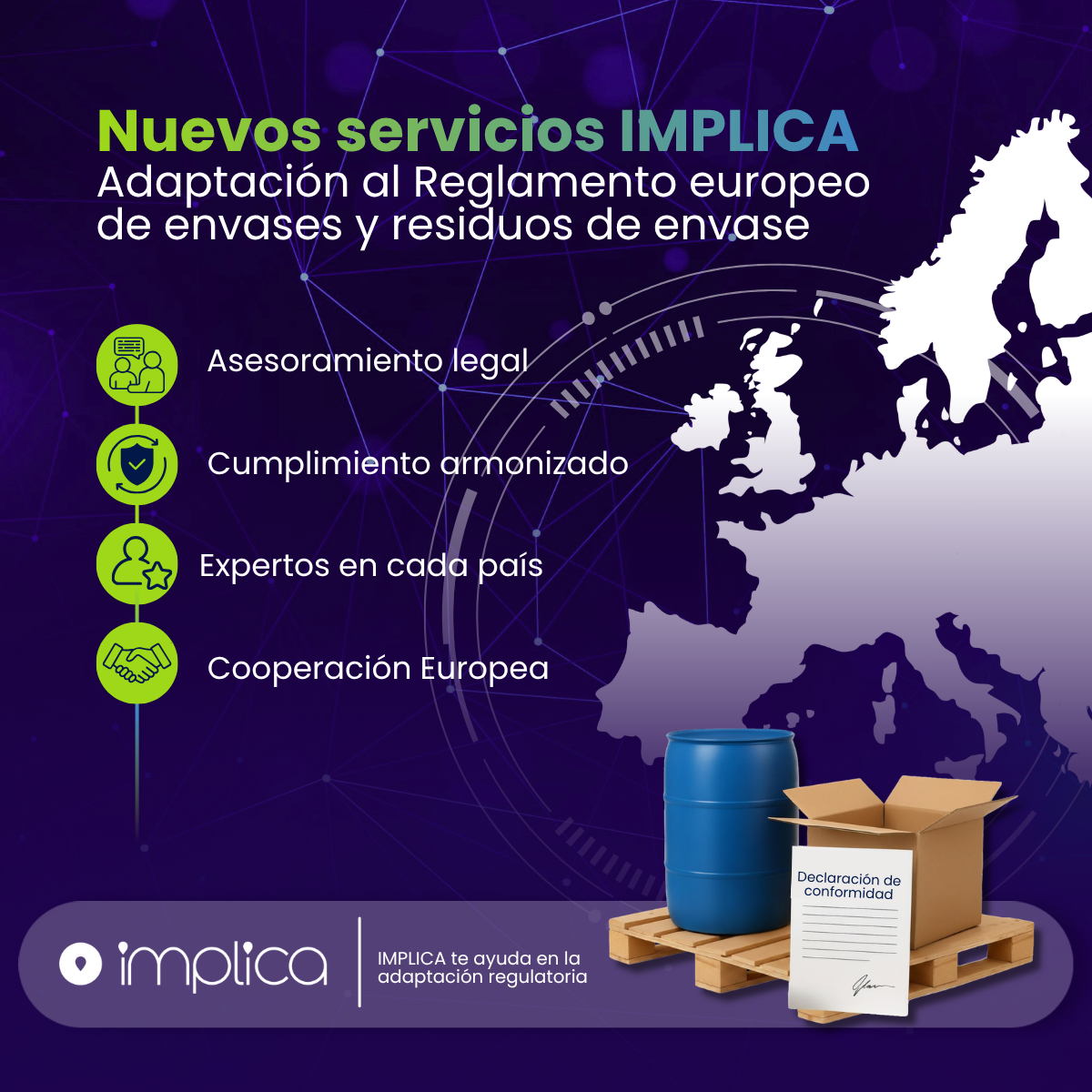
But we know that the needs don't end there. That's why the IMPLICA ecosystem incorporates ANTICIPA, a A specialized proposal for environmental compliance that allows increasingly complex obligations to be centralized in a single point of contact. related to the PPWR and Royal Decree 1055/2022, such as: Declarations of Conformity, Business Prevention and Ecodesign Plans, reuse and environmental obligations both in Spain and in other European countries.
ANTICIPA does not replace SCRAP or the obligations it already covers; IMPLICA complements them where a company needs to go further. The goal is simple: to reduce complexity, improve legal certainty, and allow companies to dedicate their resources to what truly generates value.
Turning regulation into a marketing argument
For a printing or visual communication company, anticipating PPWR can mean much more than simply avoiding non-compliance. It can help you differentiate yourself from your competitors by offering solutions designed with circularity criteria; respond to the new demands of your clients, especially large brands and companies with their own environmental strategies; improve your understanding of your materials and products through greater traceability; identify eco-design opportunities by reducing unnecessary materials and optimizing formats; develop reusable solutions for specific uses and clients; prepare for new documentation requirements before they become urgent; and strengthen your value proposition by incorporating environmental compliance as part of your service.
The customer of the future won't just be looking for who can print faster, personalize better, or produce at a lower cost. In many cases, they'll also be looking for who can offer them... a solution that meets its circularity objectives and the regulatory requirements that affect its activity.
The printing company can thus go from being a supplier to becoming a strategic partner for the fulfillment and sustainable transformation of its clients.
Anticipating is competing better
PPWR presents significant challenges. It requires investment in knowledge, process review, and, in some cases, modification of materials, designs, or logistics systems. For SMEs, this effort can be particularly significant.
But delaying decisions won't make regulation disappear. On the contrary, it could increase adaptation costs and reduce room for maneuver.
Anticipation allows it to be done in an orderly manner. At IMPLICA we believe this is the key: don't wait until an obligation becomes unavoidable to start working on it.
C!Print Madrid is a prime venue for discussing innovation because it brings together the companies that are transforming how products and spaces are produced, communicated, personalized, and presented. And circularity is already part of that transformation.
The PPWR raises a question that affects the entire value chain: do we want to simply comply when it is mandatory, or do we want to use change to make better products, offer better services, and build more competitive companies?
Our answer is clear. Regulation can be an obligation. But it can also be an opportunity to innovate, differentiate yourself, and grow.
The future of printing, visual communication, and personalization won't just be more technological and creative. It will also need to be more circular. And companies that start preparing today will be better positioned to lead the way. At IMPLICA we don't just advise: we accompany you on that journey, step by step.
IMPLICA will actively participate in the C!Print Madrid conference program, from January 12 to 14 at IFEMA.